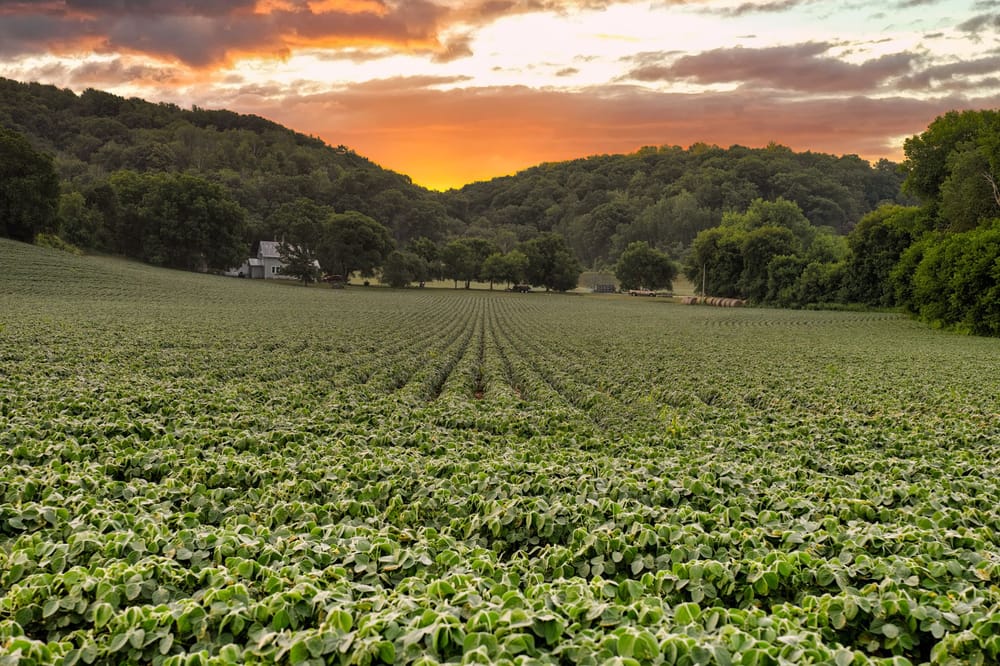
Tennessee soybean farmers are seeing somewhat better prices in the current 2026 growing season, with crops planted and weather conditions generally favorable. For farmers in Southeast Tennessee and the wider Chattanooga area, that may ease some pressure on cash flow and marketing decisions, but University of Tennessee analysts say the wider outlook is still difficult because production costs remain high and profit margins are thin.
Soybeans are one of Tennessee's major row crops, and even modest price moves can affect farm income, equipment purchases, land rents, and spending at local agribusinesses. According to the University of Tennessee Institute of Agriculture and federal market data, recent gains are an improvement from 2025 levels, not a full recovery.
What has improved for growers in 2026
Several conditions have moved in a better direction for soybean producers this season.
- Monthly U.S. soybean prices received by farmers have risen from some 2025 levels, according to the USDA National Agricultural Statistics Service price series.
- Tennessee cash grain bids tracked by the USDA Agricultural Marketing Service have shown day-to-day price support compared with weaker periods last year.
- China, the largest foreign market for U.S. soybeans, has returned to buying U.S. soybeans, according to the USDA Foreign Agricultural Service soybean export sales data.
- Fields are planted and weather has generally cooperated so far, reducing one source of uncertainty for growers.
The University of Tennessee's Department of Agricultural and Resource Economics has also pointed to shifting soybean demand and market conditions in recent presentations and market guidance for producers.
University of Tennessee market outlook materials for 2025 and 2026 show that soybean demand has improved in some channels, but producers still face a difficult balance between selling prices and production costs.
Readers can review how we handle official documents and datasets on our Source Transparency page.
Why higher prices may not mean stronger profits
Higher prices do not automatically translate into healthy returns. The University of Tennessee's 2025 field crop budgets show that seed, fuel, chemicals, machinery, and financing costs can absorb much of any price gain.
That matters for farmers deciding when to sell grain, whether to store crops, and how much risk to take on next season. For lenders, equipment dealers, grain buyers, and rural businesses, tight margins can limit spending even if prices improve modestly.
Key figures shaping the outlook
- The USDA 2025 Tennessee agriculture overview lists soybeans among the state's leading farm commodities.
- The University of Tennessee's 2025 soybean market guidance warned that profitability would remain pressured even with some market improvement.
- A 2026 University of Tennessee grain conference presentation on the shifting landscape of corn and soybean demand described a market that is improving in parts but still exposed to trade and demand risks.
The practical result is simple: a better market can lift sentiment, but many farms still need strong yields and careful marketing to finish the season in the black.
What changed in China trade, and what is still uncertain
The White House announced an economic and trade agreement with China in October 2025. After that announcement, federal export sales data showed China booking U.S. soybeans again. Those bookings support the statement that Chinese purchasing resumed, but they do not by themselves guarantee stable long-term demand or prices for the rest of 2026.
The relevant federal record for current sales is the USDA Foreign Agricultural Service soybean export sales page, which tracks weekly export commitments. Broader trade conditions can also be followed through the White House fact sheet on the October 2025 agreement.
That distinction matters for Tennessee growers. A return to orders can help demand, but trade policy, shipping patterns, and competing South American supplies can still change export conditions quickly.
Official export sales records show renewed Chinese buying after the 2025 trade agreement announcement, but future demand remains subject to weekly market changes and policy risk.
What Tennessee farmers and local businesses can do next
For growers in the Chattanooga region and across Tennessee, the next steps are practical. Farmers can compare local elevator bids, review storage and cash flow needs, and update budgets using University of Tennessee crop planning tools and USDA market reports.
- Check daily Tennessee grain bids through the USDA Agricultural Marketing Service report.
- Review University of Tennessee crop budgets and soybean market outlook publications before making sales or input decisions.
- Monitor weekly USDA export sales data for signs that foreign demand is strengthening or weakening.
- Speak with county Extension agents for local crop and marketing guidance.
Residents and business owners who track farm conditions can expect the local effect to show up gradually, not all at once. If prices hold and yields are solid, that can support spending in rural communities. If margins narrow again, farms may pull back quickly on equipment, supplies, and discretionary purchases.
Questions or corrections can be sent through our Contact Us page.
Primary sources: University of Tennessee Extension / Department of Agricultural and Resource Economics, USDA National Agricultural Statistics Service, USDA Agricultural Marketing Service, University of Tennessee Institute of Agriculture, University of Tennessee Department of Agricultural and Resource Economics, University of Tennessee Department of Agricultural and Resource Economics, USDA National Agricultural Statistics Service, The White House, U.S. Department of Agriculture, U.S. Department of Agriculture, Foreign Agricultural Service, U.S. Department of Agriculture, Foreign Agricultural Service, U.S. Customs and Border Protection, Office of the United States Trade Representative, U.S. Department of Agriculture, Foreign Agricultural Service, U.S. Department of Agriculture, Foreign Agricultural Service, U.S. Department of Agriculture, Foreign Agricultural Service, U.S. Department of Agriculture, Foreign Agricultural Service, U.S. Department of Agriculture, U.S. Census Bureau, U.S. Census Bureau, U.S. International Trade Commission. Reported by Source Text Link, Ministry of Commerce of the People's Republic of China, The State Council of the People's Republic of China, United Soybean Board, Chattanooga Times Free Press.