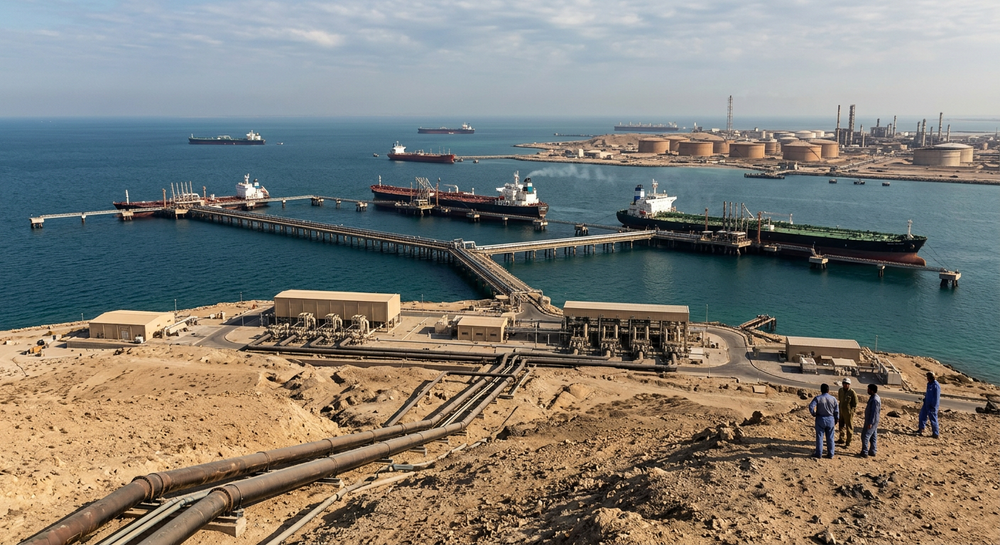
Kharg Island, an Iranian oil terminal in the Persian Gulf, is a critical chokepoint in global energy markets. According to the U.S. Energy Information Administration, Iran relies heavily on the island for crude exports, and market analysts at Kpler and Argus Media describe it as the country's main export hub. That matters in Chattanooga now because any disruption, whether from military action, sanctions enforcement, or shipping risk, can feed into world oil prices and eventually local fuel costs for commuters, trucking fleets, and businesses.
The immediate issue is not a confirmed shutdown. As of the latest official statements and market reports, Kharg Island remains a major export route, while tensions involving Iran continue to be watched by the White House, the U.S. Department of Defense, U.S. Central Command, and oil market agencies. The risk is that threats to a single facility with an outsized role in exports can tighten supply expectations even before any physical damage occurs.
What Kharg Island does, and why it matters
Kharg Island sits off Iran's southwestern coast and functions as the country's principal crude oil loading point. The U.S. Energy Information Administration says Iran holds some of the world's largest crude reserves and remains a significant producer within OPEC, the Organization of the Petroleum Exporting Countries.
Industry reporting from Kpler and Argus Media identifies Kharg Island as the backbone of those exports. The Council on Foreign Relations has similarly described the island as Iran's oil lifeline, reflecting its central role in getting crude onto tankers.
In practical terms, a problem at Kharg Island would not stay local. It could affect shipping, insurance, oil benchmarks, and fuel prices far from the Gulf, including in Southeast Tennessee.
Why local readers may notice the effects
- Drivers may see higher gasoline prices if crude prices rise.
- Freight companies and delivery businesses can face higher diesel costs.
- Airlines, manufacturers, and farms can also feel pressure from energy-linked expenses.
- Price spikes can show up quickly in wholesale markets, even if retail changes take longer.
For Chattanooga households, that can mean more expensive fill-ups and higher transport costs passed through to groceries and other goods. For more on how this newsroom handles evidence and sourcing, see our Source Transparency page.
What the official data shows about Iran's oil role
The U.S. Energy Information Administration's Iran country analysis says Iran remains a major oil producer despite sanctions. OPEC's Monthly Oil Market Report and the International Energy Agency's Oil Market Report both track Iranian output as part of the broader global supply picture.
Those reports matter because traders do not wait for a full supply loss before reacting. If a major export terminal appears at risk, prices can move on expectations alone. That is one reason analysts watch Kharg Island closely during periods of military or diplomatic tension.
The White House, the U.S. Department of Defense, and U.S. Central Command have all published Iran-related statements and releases in 2026, while the U.S. Treasury's Office of Foreign Assets Control continues to issue sanctions and enforcement actions tied to Iranian trade. Those official actions can affect shipping patterns and oil flows even without a direct strike on infrastructure.
What is confirmed, and what remains uncertain
Confirmed facts from official and industry sources are narrower than some public speculation. Kharg Island is central to Iran's oil export system. Iran remains an important producer. U.S. officials continue to issue Iran-related statements. Oil market agencies continue to track Iranian output and export conditions.
What is not confirmed is any current destruction or closure of the facility based on the source materials provided here. Claims about what could happen next remain contingent on military decisions, negotiations, sanctions enforcement, shipping insurance conditions, and tanker traffic.
Iran's own official channels, including IRNA, the state news agency, SHANA, the oil ministry news service, and the Iranian Ministry of Oil, provide state-backed accounts of developments. Those outlets can offer direct government positions, but any operational claim still requires careful verification against independent market data and official releases.
Why a distant oil terminal can affect Chattanooga quickly
Oil is globally priced. That means a disruption risk in the Persian Gulf can reach Tennessee through commodity markets, refinery costs, transport contracts, and wholesale fuel pricing. Chattanooga is not buying crude from Kharg Island directly, but local consumers still feel the effect when world supply risk rises.
Residents who commute daily, parents managing household budgets, and small business owners with vehicle fleets are often among the first to notice the impact. Truck-dependent sectors, including retail distribution and construction, may also face tighter margins if diesel prices increase.
What readers can track locally
- Retail gas and diesel price changes over the next several days.
- Public statements from the White House, Pentagon, and U.S. Treasury.
- Monthly market updates from the EIA, OPEC, and the International Energy Agency.
- Any new sanctions or shipping advisories affecting Iranian exports.
Readers can also review our Editorial Policy for how we separate verified facts from forward-looking risk. In this case, the central fact is straightforward: Kharg Island matters because it is a concentrated point in Iran's export system, and concentrated points create market vulnerability.
Primary sources: U.S. Energy Information Administration, The White House, U.S. Department of Defense, U.S. Department of the Treasury, Office of Foreign Assets Control, U.S. Energy Information Administration, Federal Register / U.S. Government Publishing Office. Reported by Source Text Link, OPEC, Kpler, Argus Media, Council on Foreign Relations, Islamic Republic News Agency, SHANA (Iranian Ministry of Oil News Service), Iranian Ministry of Oil, Iranian Customs Administration, U.S. Central Command, International Energy Agency, United Nations Security Council, CNN, Associated Press, Chattanooga Times Free Press.