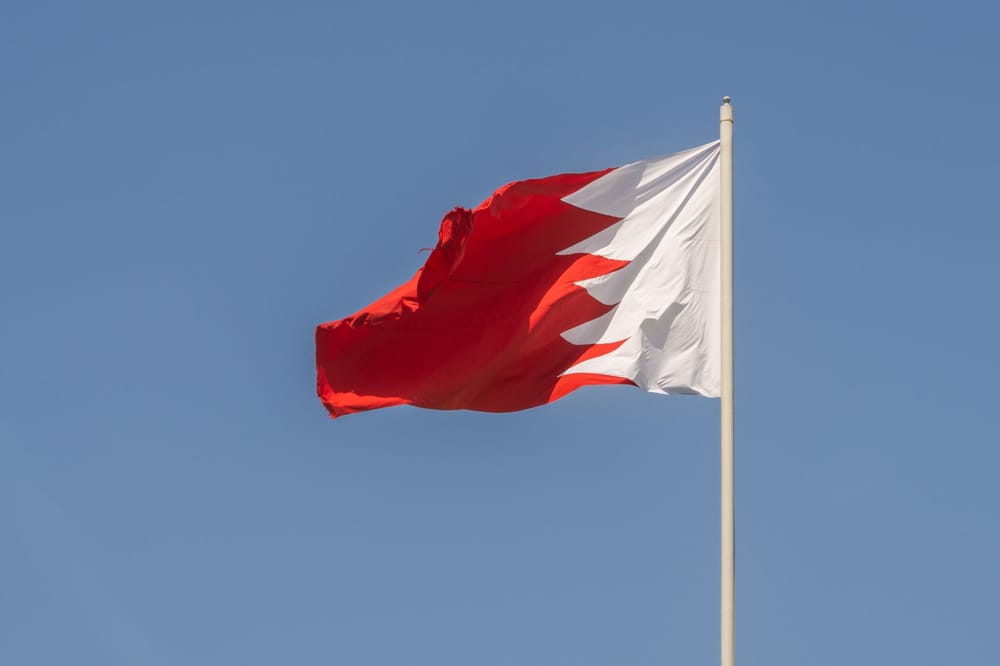
For Chattanooga residents with family in the military, Gulf-based aviation, or overseas energy work, the immediate consequence is a wider regional security risk after Iran fired drones and ballistic missiles toward Bahrain and Kuwait on Sunday. The attacks followed new U.S. strikes on Iranian nuclear sites, according to U.S. Central Command, the U.S. military command responsible for the Middle East.
Bahrain and Kuwait both said the projectiles targeted their territory, and Iran's Islamic Revolutionary Guard Corps, the branch of Iran's armed forces that runs many of its missile and drone operations, claimed responsibility in an official announcement. Iranian officials also threatened a "complete halt" to negotiations if Washington continues military action, a position reflected in statements cited by the U.S. Department of State, Iran's state news agency IRNA, and a United Nations press briefing.
What officials say happened on Sunday
CENTCOM said Iran launched drone and missile attacks toward Bahrain and Kuwait on Sunday. Bahrain's foreign ministry and Kuwait's foreign ministry each issued official notices saying Iran fired ballistic missiles and drones toward the two Gulf states.
- Bahrain's Ministry of Foreign Affairs said Iran launched ballistic missiles and drones toward Bahrain and Kuwait.
- Kuwait's Ministry of Foreign Affairs issued a matching statement describing missiles and drones fired toward Kuwait and Bahrain.
- Iran's IRGC published an official announcement claiming the launch.
Iran launched drone and missile attacks toward Bahrain and Kuwait on Sunday, according to U.S. Central Command.
The official statements provided do not settle every operational detail in public, including the full number of projectiles, exact launch points, or all interception results. Those points remain subject to government updates and military assessment.
How the new attacks connect to the U.S. strikes
The United States has publicly confirmed new strikes on Iranian nuclear facilities. The U.S. Department of Defense, the White House, and the State Department each released statements on the operation.
A Congressional Research Service report also outlines the U.S. strikes on nuclear sites in Iran. Another official release from the U.S.-Israel Joint Strategic Command describes coordinated strikes.
Those statements establish the sequence at the center of Sunday's escalation: U.S. strikes were followed by Iranian attacks directed at Bahrain and Kuwait. That matters locally for service members' relatives, international travelers, and Chattanooga employers with staff in the Gulf, because further retaliation can quickly affect deployments, flight routes, and business continuity.
Why Bahrain and Kuwait matter
Bahrain and Kuwait are key U.S. security partners in the Gulf. Any attack involving those countries raises the chance of a broader regional military response and can affect U.S. forces stationed across the region.
Readers who want to understand how we handle official claims and conflicting wartime statements can review our Editorial Policy and Source Transparency pages.
Threat to negotiations adds another layer of risk
Iran also threatened to stop talks altogether if U.S. attacks continue. Public references to a suspension or halt in talks appear in the State Department release, the IRNA report, and the U.N. briefing.
Iran has threatened a complete halt in negotiations if Washington continues its attacks, according to official statements and public briefings cited by U.S. and international sources.
That does not mean diplomacy has formally ended for good. It means the path back to talks is less certain, and official positions may shift quickly as military events develop.
What local readers can do now
- Military families should monitor updates from official Department of Defense channels and their service branch family readiness contacts.
- Travelers with Gulf connections should check airline alerts and U.S. State Department travel notices before departure.
- Employers with staff in the region should review security and communication plans for Bahrain, Kuwait, and nearby Gulf states.
- Readers with verified local information or concerns can reach our newsroom through Contact Us.
Officials are still assessing Sunday's attacks and the broader response. Any casualty figures, damage assessments, or diplomatic changes should be treated as provisional until confirmed by the governments directly involved.
Primary sources: U.S. Department of Defense, The White House, U.S. Department of State, Congressional Research Service, U.S.-Israel Joint Strategic Command, U.S. Department of State. Reported by Source Text Link, U.S. Central Command (CENTCOM), Ministry of Foreign Affairs of Bahrain, Ministry of Foreign Affairs of Kuwait, Islamic Revolutionary Guard Corps (IRGC), Islamic Republic News Agency (IRNA), United Nations, Chattanooga Times Free Press.