The Tennessee Valley Authority, the federally owned public utility that supplies electricity across the Tennessee Valley, is opening Raccoon Mountain to public tours in 2026 as part of America 250, the national commemoration of the 250th anniversary of the United States. For Chattanooga-area residents, that means a rare chance to visit one of the region's most unusual energy sites and a practical reason to check tour availability early through TVA's official visitor channels.
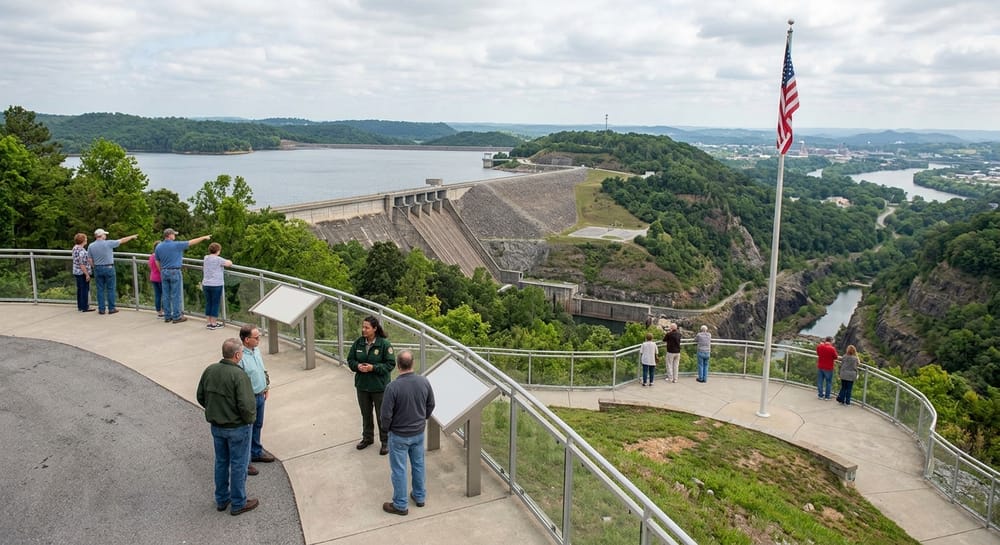
TVA said the reopening is tied to its broader "Built for the People" anniversary programming, which connects the utility's history to the nation's semiquincentennial. Raccoon Mountain, west of downtown Chattanooga, is home to TVA's pumped-storage hydroelectric plant, a facility designed to move water between reservoirs to help meet changes in electricity demand.
What TVA is opening to the public
According to TVA, the Raccoon Mountain Visitor Center has reopened to the public, and tours of the site are being offered as part of the anniversary effort. The facility is one of TVA's best-known engineering projects and has long been used to explain how pumped-storage power works.
- Site: Raccoon Mountain Pumped-Storage Plant and visitor area near Chattanooga
- Operator: Tennessee Valley Authority, the nation's largest public power provider
- Occasion: America 250, the 250th anniversary of the nation's founding in 2026
- Public access: Visitor center reopening and scheduled tours through TVA
TVA describes Raccoon Mountain as part of its "Built for the People" initiative marking the nation's 250th anniversary.
TVA's anniversary pages frame the tours as both a public history event and a look at modern power operations. Readers who want to understand how this newsroom handles official claims can review our Editorial Policy and Source Transparency pages.
Why Raccoon Mountain matters in the Chattanooga area
Raccoon Mountain is not a conventional dam. It is a pumped-storage plant, meaning TVA pumps water uphill to a reservoir when electricity demand is lower, then releases that water through turbines when demand rises. That makes the site useful for balancing the power system during peak periods.
TVA has described the facility as a major part of its hydroelectric and grid-support operations. Its history also ties directly to TVA's wider mission, which began under the Tennessee Valley Authority Act of 1933, a federal law created during the New Deal.
What visitors should expect before making plans
TVA has not presented the tours as open walk-in access at all times. Visitors should expect scheduled entry, site rules, and possible limits based on operations, staffing, or safety requirements.
- Check TVA's official Raccoon Mountain visitor information before traveling
- Look for tour schedules, reservation instructions, and any age or safety restrictions
- Allow extra time for travel if coming from downtown Chattanooga or nearby interstate routes
For families, students, and engineering enthusiasts, the tours offer a local field-trip option tied to both national history and regional infrastructure. For commuters and nearby residents, the practical takeaway is simple: if visitation increases around anniversary events, plan ahead rather than assuming immediate access.
How the tours fit into the national anniversary
America 250 is the federal government's name for the 250th anniversary of the United States in 2026. Federal agencies including the White House, the National Archives, and the Department of the Interior are planning related events and educational programming.
TVA's role is distinct because it is both a federal corporation and a regional utility. By opening Raccoon Mountain tours, TVA is linking that national anniversary to a Chattanooga-area site that residents can actually visit.
Anyone planning to attend should use TVA's official website for booking or visitor updates. If tour details change, TVA would be the authoritative source for schedules, closures, and entry requirements. Readers can also Contact Us if they see local access changes or traffic impacts connected to the tours.
Primary sources: National Archives, Tennessee Valley Authority (TVA), U.S. Government Publishing Office (via GovInfo), The White House, U.S. Department of the Interior, U.S. Government Publishing Office (GovInfo), National Archives and Records Administration. Reported by Source Text Link, Tennessee Valley Authority (TVA), Wikipedia, J.D. Power / TVA Public Relations, Chattanooga Times Free Press.