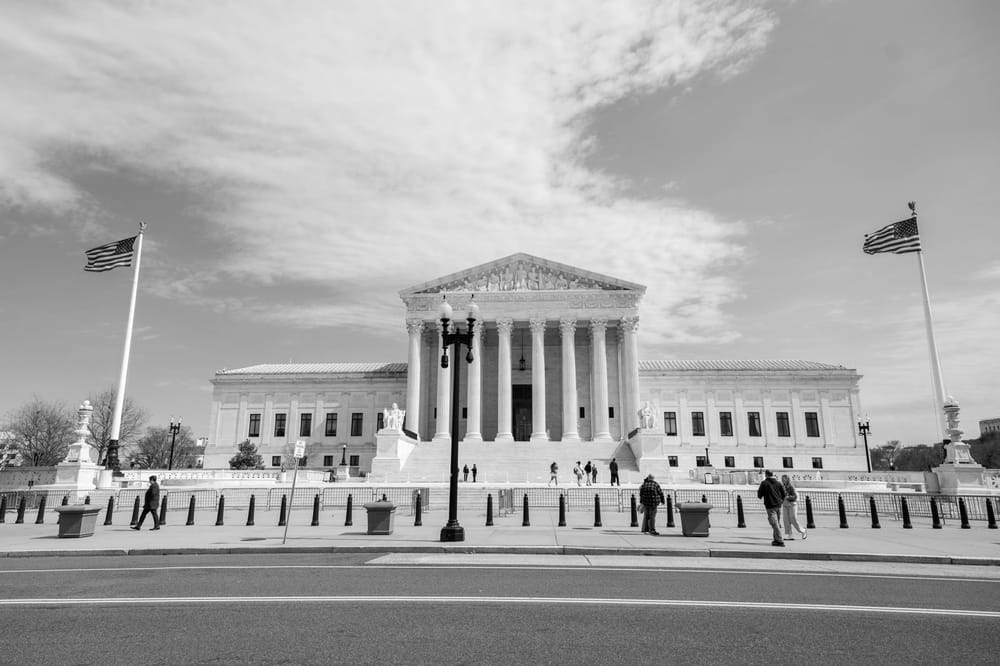
The U.S. Supreme Court ruled Tuesday that federal limits on how much political parties can spend in coordination with candidates for Congress and president are unconstitutional, wiping out a campaign finance restriction that had been part of federal law for decades.
For voters, candidates, donors and local party organizations in Tennessee, the decision could change how money is raised and spent in future federal races, including U.S. Senate, House and presidential contests. The ruling allows parties to spend more directly with campaigns, which could increase the role of party committees in advertising, strategy and voter outreach.
High court strikes down part of federal election law
The case is National Republican Senatorial Committee v. Federal Election Commission, docket 24-621. In its opinion, the court struck down limits on "coordinated party expenditures," meaning spending by party committees that is made in cooperation with a candidate's campaign.
Those limits were part of the Federal Election Campaign Act, often called FECA, the main federal law governing campaign finance. The Congressional Research Service, a nonpartisan arm of Congress, has described coordinated party expenditure limits as caps tied to office and state population, with separate rules for Senate, House and presidential candidates.
The Supreme Court held that the spending limits violate constitutional protections for political speech and association.
The court's opinion is available from the Supreme Court of the United States. Background on the law is also available through the Federal Election Campaign Act and a Congressional Research Service overview.
What the ruling means for federal campaigns
Coordinated spending differs from independent political spending because it is carried out with a candidate's campaign rather than separately. Before Tuesday's ruling, federal law limited how much parties could spend that way.
Now, national and state party committees may have broader room to work directly with federal candidates. That could affect how campaigns allocate money for television ads, digital outreach, field operations and mailers.
- Who is affected: National party committees, state party organizations and federal candidates for president, Senate and House.
- What changed: Federal caps on coordinated party spending were struck down.
- Why it matters locally: Tennessee party organizations and campaigns in Chattanooga-area congressional races could have more flexibility in future federal election spending.
The Federal Election Commission, the independent federal agency that enforces campaign finance law, has tracked the litigation in public case materials. Those records show the dispute centered on whether these coordinated spending limits could survive First Amendment review.
What coordinated spending means in plain language
If a party committee pays for campaign activity after planning it with a candidate, that is coordinated spending. It is different from a super PAC or outside group acting on its own without campaign coordination.
That distinction has long mattered in federal election law because coordinated spending has typically been treated more like a direct campaign contribution. The Supreme Court's ruling changes that framework for party committees.
What Tennessee readers should watch next
Residents following the 2026 election cycle should expect the Federal Election Commission to update its guidance and compliance materials in response to the ruling. Candidates, local party officials and donors will likely look for new legal directions on reporting and campaign coordination.
For readers trying to track how campaign money is reported, the official channel is the FEC, which publishes federal campaign filings and legal updates. Readers who want to understand how we handle sourcing and verification can review our Source Transparency and Editorial Policy pages.
The ruling does not automatically change state or local election finance rules. It applies to federal elections and to the specific federal limits the court reviewed in this case.
Primary sources: Supreme Court of the United States, U.S. Congress (Congressional Research Service), Cornell Law School (Supreme Court Database), Federal Election Commission, Federal Election Commission, Federal Election Commission, Supreme Court of the United States, Federal Election Commission (FEC), Federal Election Commission (FEC). Reported by Source Text Link, Chattanooga Times Free Press.