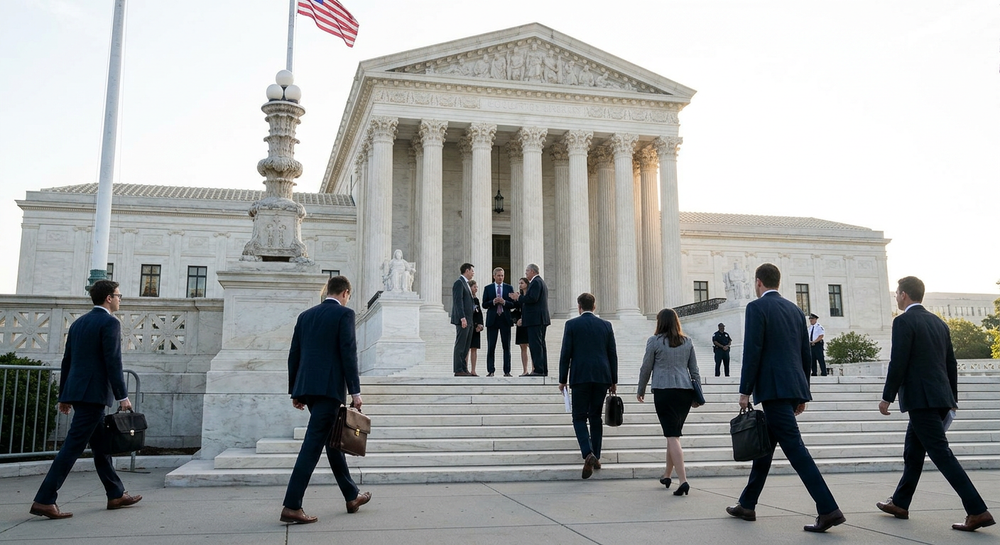
The U.S. Supreme Court will take up a new Second Amendment case on whether laws banning certain semiautomatic rifles are constitutional, putting a closely watched gun rights dispute back before a court that has recently broadened protections for firearm possession.
For Chattanooga residents, gun owners, local law enforcement and anyone following state and federal firearms policy, the practical effect is not immediate. Tennessee does not have a statewide ban on these rifles, but a Supreme Court ruling could reshape how states and lower courts handle future gun restrictions across the country.
The case reaches the court after years of litigation over laws commonly described as assault weapons bans. The justices' move means they are now prepared to answer a question they previously left unresolved in earlier gun cases.
What the Supreme Court is being asked to decide
The central issue is whether bans on specified semiautomatic rifles are consistent with the Second Amendment, which protects the right to keep and bear arms. The dispute comes as lower courts have applied the Supreme Court's recent firearms rulings in different ways.
In Snope v. Brown, the court previously declined to grant review, but separate writings from justices signaled continuing interest in the issue. A later petition now gives the justices a vehicle to address it directly.
- The court has already issued major Second Amendment rulings in recent terms.
- Lower courts have been weighing firearm laws under the history-focused test the justices adopted in earlier cases.
- This new case asks whether bans on certain rifles can survive that constitutional review.
The Supreme Court's decision to hear the case means the justices are set to give a fuller answer on how far the Second Amendment reaches in challenges to rifle bans.
The court's recent decision in United States v. Rahimi upheld a federal gun restriction for people subject to domestic violence protective orders, while also reaffirming that judges must examine whether modern gun laws fit within the nation's historical tradition of firearm regulation.
Why this case matters beyond Washington
A Supreme Court ruling could have consequences well outside the states that currently enforce these bans. If the justices strike them down, similar laws elsewhere could become vulnerable. If the court upholds them, states may gain firmer legal ground to keep or adopt comparable restrictions.
That matters in Tennessee because federal constitutional rulings set the rules lower courts must follow. Even without a current state ban, the decision could shape future lawsuits, legislative debates and enforcement questions.
What local readers should watch for next
- The Supreme Court's scheduling order, including briefing and oral argument dates.
- Whether the justices frame the issue narrowly around specific rifle models or more broadly around states' power to regulate firearms.
- How the ruling may affect other pending Second Amendment cases in lower courts.
Residents who want to track the case can monitor the Supreme Court docket and opinions directly through the court's website. Readers who want to understand how we handle sourcing and verification can review our Source Transparency and Editorial Policy pages.
There is no immediate action required for Tennessee gun owners or buyers based solely on the court's decision to hear the case. The next practical step is to watch for oral arguments and, later, the court's final opinion.
Primary sources: Supreme Court of the United States, Supreme Court of the United States, Supreme Court of the United States, Supreme Court of the United States, Supreme Court of the United States. Reported by Chattanooga Times Free Press.