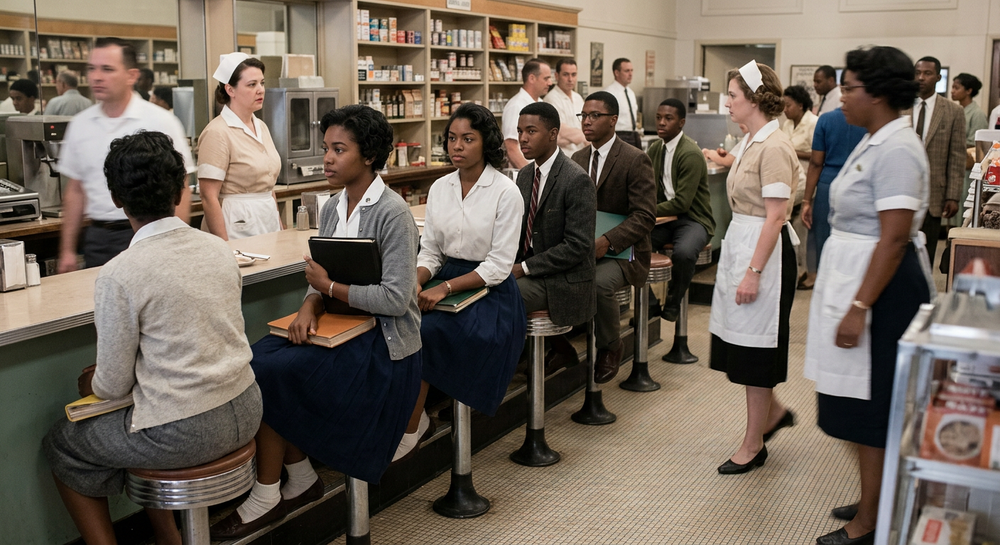
Howard High School students were central to Chattanooga's fight against Jim Crow segregation, planning the rules for a lunch counter sit-in during trigonometry class and helping force change at downtown businesses in 1960. For Chattanooga residents, parents, students and anyone following the city's 250th anniversary, the history matters because it places local teenagers, not only adult leaders, at the center of one of the city's most consequential civil rights campaigns.
The account was highlighted in recent reporting by the Chattanooga Times Free Press and is supported by historical records from the SNCC Digital Gateway, PBS and academic research on the sit-ins. Those sources describe how students at the then all-Black Howard High School organized direct action against segregated lunch counters and faced arrests, harassment and violence as they pressed for equal access.
Students organized the sit-in strategy at Howard High
According to the Times Free Press account, students worked out the ground rules for their protest while sitting in trigonometry class. The effort grew from a youth-led movement at Howard High, a school that became one of Chattanooga's most important centers of civil rights organizing.
The SNCC Digital Gateway, a project documenting the Student Nonviolent Coordinating Committee, says attorney and activist Pauli Murray helped organize Howard student sit-ins in Chattanooga. Historical accounts also describe the role of local Black leaders and educators who supported students as they challenged segregation in public accommodations.
Historical records show Howard High students were not bystanders in Chattanooga's civil rights struggle. They were organizers, participants and public faces of the sit-in movement.
- Howard High students planned and joined lunch counter sit-ins in downtown Chattanooga.
- The demonstrations targeted segregated service at stores and restaurants.
- Students adopted nonviolent discipline as they entered white-only spaces.
- The campaign became part of a wider 1960 push against segregation across the South.
What the 1960 protests changed in Chattanooga
The local consequence was immediate and risky. Students and other demonstrators faced confrontation as they challenged segregation rules that shaped where Black residents could eat, shop and gather in public. A 2020 Times Free Press retrospective documented that fire hoses were used against lunch counter demonstrators in Chattanooga during that period.
Research published through Virginia Commonwealth University's Scholars Compass describes the sit-ins as a key moment in the city's civil rights history, with local Black community support playing an important role. PBS also documented the story in a History Makers segment on Howard High School's Class of 1960.
For present-day readers, the episode helps explain how segregation was dismantled not only through court rulings and national legislation, but also through local student action in places like downtown Chattanooga.
Why the story remains relevant during Chattanooga 250
As Chattanooga marks its 250th year, the history adds context to public discussions about who shaped the city. It also broadens the local record beyond official institutions by showing how teenagers helped drive public change.
That matters for schools, museums and families looking to understand the city's past in practical terms: who acted, where they acted and what consequences they faced. Readers can also review our Editorial Policy and Source Transparency pages for how we handle historical sourcing and verification.
How to learn more about the Howard High sit-ins
Residents who want to follow up can look for records from the SNCC Digital Gateway, PBS's History Makers coverage and academic work on Chattanooga's sit-ins. Teachers and parents may also want to check local school and library programming tied to Chattanooga 250 for exhibits, talks and community history events.
For anyone tracing the sites involved, focus on downtown lunch counters and Howard High School's role in the movement. Those are the places where Chattanooga students helped unravel the city's segregation system.
Primary sources: Virginia Commonwealth University Scholars Compass. Reported by Source Text Link, SNCC Digital Gateway, PBS (Public Broadcasting Service), The Chattanoogan, Chattanooga Times Free Press.