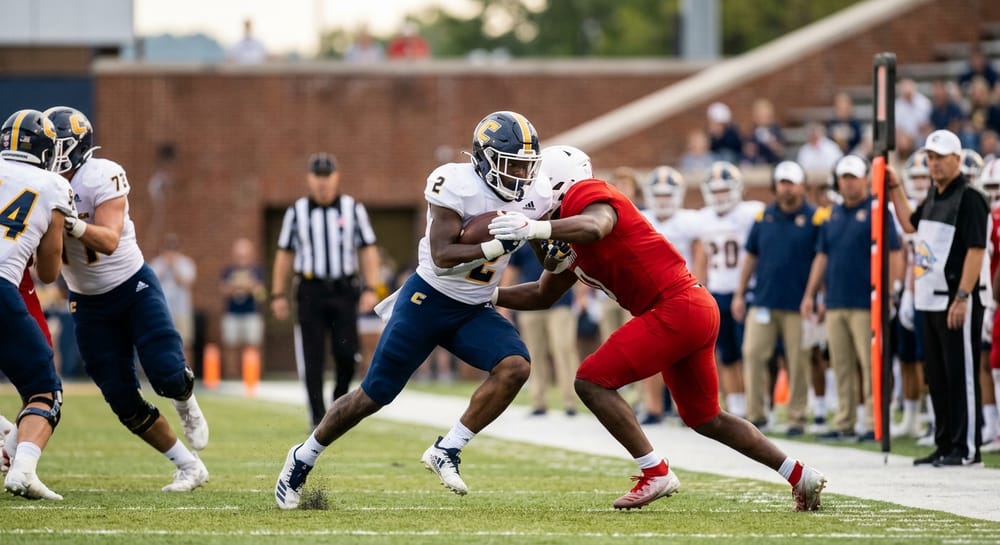
University of Tennessee at Chattanooga football is still likely to land high-paying games against Football Bowl Subdivision opponents, even as the Southeastern Conference moves to phase out its late-season matchups against Football Championship Subdivision teams.
For UTC fans, donors and athletic department leaders, the local impact is financial as much as competitive. These so-called buy games, often called money games, can bring in large payouts that help support a Football Championship Subdivision program’s budget, even when the opponent comes from a bigger conference.
The SEC announced a 2027 football scheduling policy that will require each team to play a major nonconference opponent annually, a shift linked to the likely end of the league’s traditional November games against lower-division opponents. The conference outlined the change on its official website, and the NCAA separately reported on the decision following the SEC’s annual meetings.
What the SEC change means for UTC and other FCS programs
UTC competes in the Football Championship Subdivision, the level below the Football Bowl Subdivision in Division I football. SEC schools are part of the higher FBS tier, where athletic budgets and television revenue are far larger.
The concern for schools like UTC is straightforward: if SEC teams remove late-season FCS opponents from their schedules, there could be fewer openings for guaranteed-pay games. But the broader market for those games is expected to remain, because FBS teams outside the SEC still schedule FCS opponents, and SEC schools can still face FCS teams earlier in the season.
- The SEC’s new policy begins in 2027.
- Each SEC team will be required to play one nonconference game against a major opponent each year.
- The change is widely seen as ending the league’s long-running late-November FCS scheduling pattern known as cupcake weekend.
The SEC said its 2027 football scheduling policy will require every school to play one nonconference game each season against an opponent from a major conference or Notre Dame.
That policy affects timing and scheduling flexibility, but it does not amount to a blanket ban on all FCS opponents. For Chattanooga readers tracking what this means close to home, that distinction matters.
Why buy games remain important to UTC athletics
For many FCS programs, a road game at an FBS stadium can be worth hundreds of thousands of dollars. Those guarantees can support scholarships, travel, staffing and other operating costs across an athletic department.
UTC has long used those games as part of its financial model. Even if one scheduling window narrows in the SEC, schools in other conferences will still need nonconference opponents, and some SEC schools may continue to use earlier dates for FCS matchups.
That means Chattanooga supporters should not assume the revenue stream will disappear. The likely outcome is adjustment, not elimination.
What local fans should watch next
UTC schedules are usually shaped years in advance, so any effect may unfold gradually rather than all at once. Fans watching for future money games should pay attention to:
- SEC football schedule announcements for 2027 and beyond.
- UTC nonconference scheduling releases in future seasons.
- Whether regional FBS programs continue booking FCS opponents in September.
Readers who want to understand how this newsroom handles source verification can review our Source Transparency and Editorial Policy pages.
What residents and fans can do now
For now, UTC supporters do not need to expect an immediate end to these matchups. The practical next step is to watch official schedule releases from UTC, the SEC and the NCAA for confirmed future opponents and game dates.
Those updates will show whether Chattanooga continues to secure the kind of guarantee games that have long been part of the financial reality for FCS football.
Reported by Source Text Link, Southeastern Conference, National Collegiate Athletic Association, Chattanooga Times Free Press.